

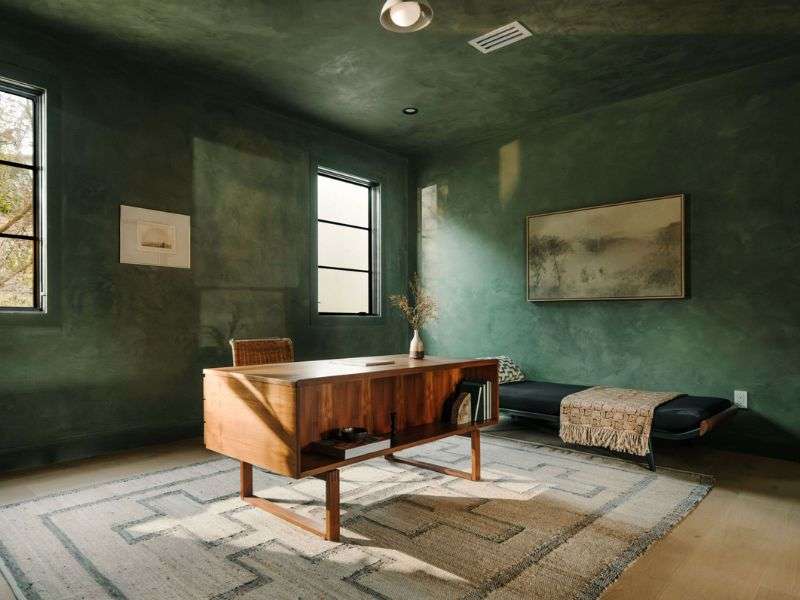
Moroccan Clay vs paint is one of the most useful comparisons for homeowners who want breathable, natural, and elegant textured walls. In today’s design world, homeowners are moving beyond flat, synthetic finishes and embracing materials that feel natural, calming, and alive. Enter Moroccan Clay plaster, a time-honored finish reimagined for modern interiors. If you’re searching for a DIY plaster, exploring textured walls, or comparing clay plaster vs regular paint, Moroccan Clay offers a compelling, health-forward upgrade.
Unlike traditional paint, which coats a surface in a thin, sealed film, clay plaster transforms your walls into breathable, organic surfaces that interact with your environment, both visually and physically.
Moroccan Clay vs Paint: Why Clay Plaster Is Different from Regular Paint
Standard acrylic or latex paints are made with synthetic binders, VOCs, even in many “low-VOC” versions, and chemical additives designed to create a uniform, durable coating. While effective, they often lack depth, movement, and breathability.
Moroccan clay plaster, by contrast, is crafted from natural minerals and clays, contains zero VOCs, remains highly vapor permeable, allowing walls to breathe, and produces a soft, nuanced variation in tone and texture.
This means your walls do not just look better. They perform better in your home.
The Organic Design Benefits of Moroccan Clay Plaster
Moroccan Clay delivers what today’s homeowners and designers crave: authenticity.
Natural Movement & Depth
Each wall becomes a one-of-a-kind surface with subtle tonal shifts and hand-applied texture. No two walls are ever the same, giving your space a bespoke, artisanal feel.
Soft, Calming Aesthetic
The matte, velvety finish diffuses light rather than reflecting it, creating a warm, grounded environment. This is why clay plaster is often used in spa-inspired interiors and wellness-focused design.
Elevated Textured Walls
If you are looking to move beyond flat paint, Moroccan Clay plaster is the ultimate way to achieve textured walls that feel modern yet timeless.
The Health Benefits of Breathable Clay Plaster
One of the most overlooked advantages of clay plaster is how it contributes to a healthier indoor environment.
Breathability Matters
Clay plaster is naturally vapor permeable, allowing moisture to pass in and out of the wall system. This helps regulate indoor humidity, reduces the risk of mold and mildew, and contributes to healthier indoor air quality.
Low VOC
Clay plaster supports a healthier indoor environment. It is an excellent choice for bedrooms, nurseries, and wellness spaces where clean air quality is a priority.
Naturally Antimicrobial
Due to its mineral composition and high pH, clay plaster naturally resists bacteria growth.
DIY-Friendly: The Plaster That’s Easier Than You Think
Plaster can feel intimidating, but it does not have to be.
Moroccan Clay takes the fear out of plaster application, making it one of the most approachable DIY plaster options on the market.
Why Moroccan Clay Is DIY-Friendly
Clay plaster is DIY-friendly thanks to its smooth, workable consistency and forgiving application process. It is easy to layer and blend, and it does not require a perfectly precise technique to achieve a beautiful finish.
Even beginners can achieve beautiful results with a little practice. Imperfections actually enhance the organic look, making it ideal for homeowners who want a high-end finish without hiring a professional.
What Is a Trowel (And Why It Matters)?
A trowel is the primary tool used to apply plaster. It is a flat, handheld tool, typically made of stainless steel, with a handle that allows you to spread and compress material onto a surface.
Meoded Offers Multiple Trowel Options
As a premium plaster manufacturer, Meoded understands that different finishes require different tools. That is why we offer a range of trowels designed for:
- Smooth, burnished finishes
- Soft, cloud-like movement
- Heavier texture applications
The right trowel helps control pressure, movement, and finish variation, giving you more creative freedom. For Moroccan clay plaster application, a stainless steel trowel is a reliable all-purpose choice, while a whiteout trowel is recommended when working with lighter colors to help prevent burnishing or carbon marks.
Easy to Learn, Hard to Mess Up
Moroccan clay offers an intuitive application process. Simply apply thin layers, use sweeping or cross-hatch motions, and build texture gradually for a natural, beautiful finish. Because the clay is so forgiving, it is one of the easiest ways to learn plaster application.
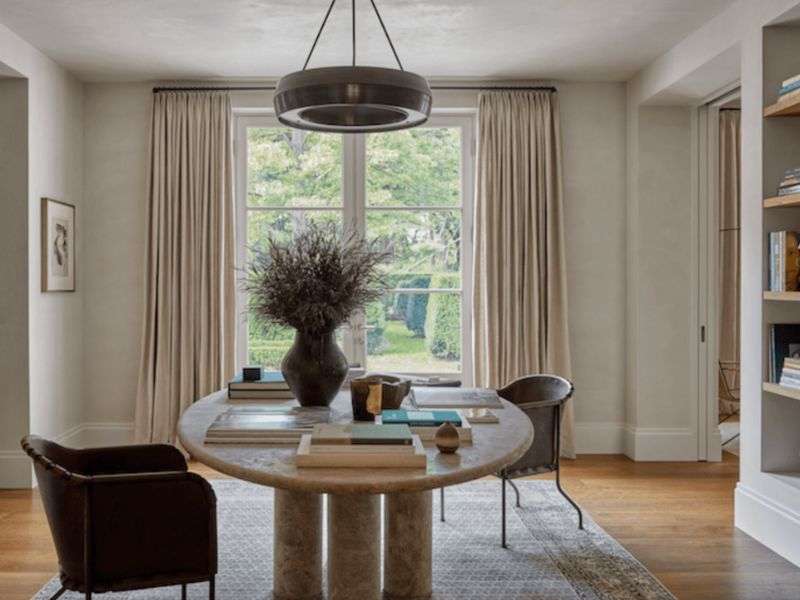
Why Choose Meoded Moroccan Clay?
When it comes to clay plaster, not all products are created equal. Our Moroccan Clay stands apart as a true, authentic clay plaster, not a synthetic alternative, offered in 88 curated colors and fully custom-tintable to suit any design vision. It is trusted by professionals yet accessible for DIYers, widely distributed across the U.S., Canada, and Australia, and available to ship worldwide.
Unlike Roman Clay, Moroccan Clay is a true authentic clay plaster, making it more durable, opaque, and natural.
Top 3 FAQs: Moroccan Clay vs Paint
Q: Is clay plaster better than paint?
A: Moroccan Clay plaster offers superior breathability, natural composition, and aesthetic depth compared to paint. While paint is easier for quick applications, clay plaster provides stronger long-term design and health benefits.
Q: Is clay plaster more durable than paint?
A: Yes, most of the time. Moroccan Clay plaster is thicker and more resilient than most paints. It can be repaired easily and tends to age more gracefully, developing character rather than wear.
Q: Is clay plaster harder to apply than paint?
A: Not necessarily. While it uses different tools, such as a trowel, many DIYers find it just as approachable, especially with user-friendly products like Meoded Moroccan Clay.
If you are looking to upgrade your walls beyond basic paint, Moroccan Clay offers a perfect blend of organic design, health benefits, and DIY accessibility. With its natural composition, breathable finish, and artisanal beauty, it is more than just a wall treatment. It is a lifestyle upgrade.
And with Meoded’s thoughtfully curated colors, customizable options, and beginner-friendly application, achieving high-end textured walls has never been easier.
Ready to find a Meoded dealer near you? Visit: Store Locator
Other Resources:
Moroccan Clay: The Beginner-Friendly Matte DIY Plaster You’ve Been Waiting For
Moroccan Clay vs Lime Wash: DIY Wall Finishes Compared
Venetian Plaster vs Moroccan Clay: 7 Powerful Differences Between Gloss & Matte Finishes
Moroccan Clay vs Concretta — Which Textured Finish to Choose
FAQs: Meoded Moroccan Clay vs Roman Clay
Q: What is the difference between Moroccan Clay and Roman Clay?
A: Moroccan Clay is a natural clay plaster that creates breathable, matte textured walls with soft movement and an organic finish, while Roman Clay is a gypsum-based decorative coating. For homeowners seeking a more natural wall surface with artisanal depth, Moroccan Clay offers a more earth-based look and feel.
Q: Which is more durable, Moroccan Clay or Roman Clay?
A: Moroccan Clay is more durable due to its mineral-rich clay composition and typically thicker application. This added density helps it resist wear over time, making it a better choice for surfaces that may experience more use while still maintaining its natural, textured appearance.
Q: Is Moroccan Clay easier to customize than Roman Clay?
A: Yes. Its thicker consistency allows for a wider range of textures and finishes, giving you greater creative control. It is available in 88 curated colors, can be color matched to virtually any shade, and offers different topcoat options that create varying levels of sheen for the final finish.
Q: Where can I buy Meoded Moroccan Clay plaster?
A: It is widely available online and through authorized Meoded dealers across the United States, Canada, and Australia.
Q: Why choose Moroccan Clay over Roman Clay for DIY projects?
A: Moroccan Clay is more forgiving, durable, and authentic. Unlike Roman Clay, Moroccan Clay is a true clay plaster, making it the better choice for achieving organic, textured walls with long-lasting performance. Its durability also helps in both application and maintenance.