


Why Lime Wash and Venetian Plaster Bring Color to Life
Lime wash and Venetian plaster trends are shifting toward deep, moody tones like Red Wine, as designers move beyond flat neutrals into richer, more immersive finishes.
At the center of this movement is Red Wine, a standout shade from Meoded’s 88 curated color fandeck. Red Wine, a carefully crafted dramatic hue that delivers richness, warmth, and depth, is having a moment.
And when applied through Meoded Lime Wash or Venetian Plaster, Red Wine, and similar hues like Farrow and Ball Binjal or Benjamin Moore Ruby Dusk, become more than a color. That moody, sophisticated jewel tone becomes an experience, signaling a return to materiality and authenticity.
Designers are no longer satisfied with flat finishes and one-dimensional color. They’re seeking depth, movement, and natural variation.
With Meoded’s lime wash and lime plasters, curated colors like Red Wine become more than a selection from a fandeck; they become a living surface that evolves with light, time, and your environment. Meoded’s organic finishes paired with designer colors provide a layered stimulation, both tactile and visual, that regular paint can’t deliver.
YOU MAY BE INTERESTED IN: Moroccan Clay vs Paint: The Organic, Breathable Choice for Textured Walls
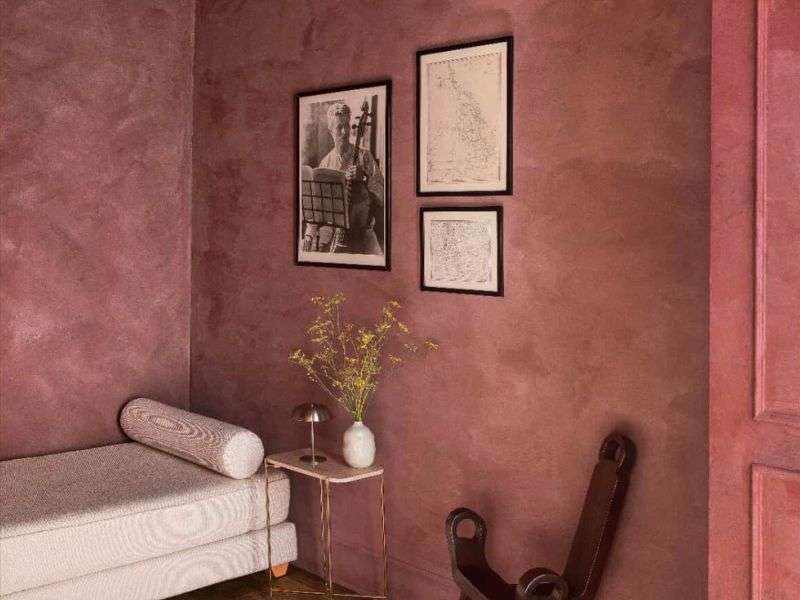
The Jewel Tone Era in Lime Wash and Venetian Plaster, Reimagined
Designers are firmly in their jewel tone era, but this time, it’s less about bold accents and more about immersive environments. Shades like emerald, sapphire, and garnet are being used expansively, covering entire walls and architectural surfaces.
Red Wine stands out within this palette because it strikes a rare balance, deep and moody, yet still warm and inviting. It feels bold without becoming overpowering, and carries a sense of sophistication grounded in a natural earthiness.
It’s a color that creates atmosphere instantly, transforming a room into something intimate, layered, and emotionally resonant.
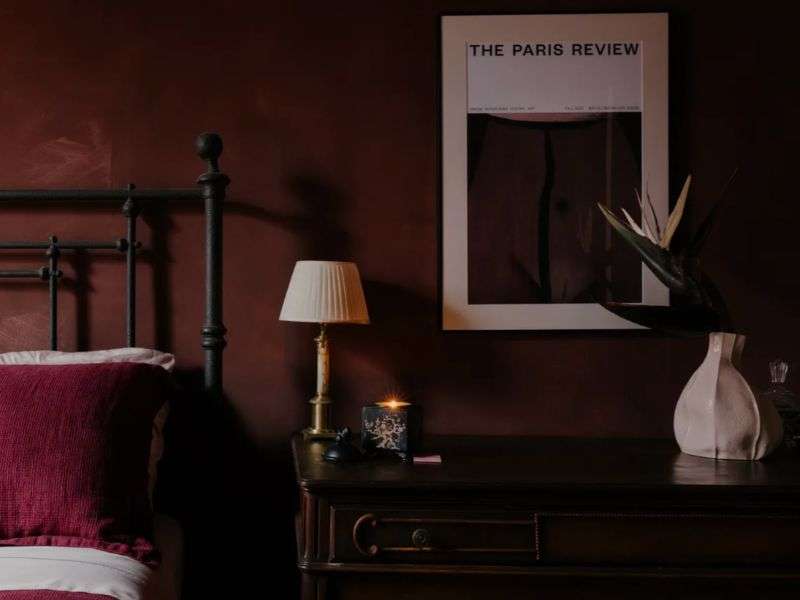
Why Moody Colors like Red Wine Thrive in Lime-Based Finishes
What makes Red Wine especially compelling right now isn’t just the hue, it’s how it’s being applied.
Designers are moving away from flat, synthetic coatings and embracing lime-based finishes that bring color to life through texture, movement, and light interaction.
Meoded Lime Wash: Soft Depth & Organic Movement
When Red Wine is applied in Meoded Lime Wash, it takes on a completely different character than it would in traditional paint.
Because lime wash is made from natural limestone, it creates a velvety, matte finish with gentle variation. The pigment naturally forms subtle highs and lows that add depth, while a soft, cloud-like movement drifts across the wall, giving the surface a quiet, organic character.
Instead of a uniform wall color, Red Wine Lime Wash becomes layered, almost like a wash of pigment that feels aged, mineral, and quietly dynamic.
The result is an earthy sophistication; a finish that feels both ancient and modern at the same time.
Stucco Lamundo: Polished Drama & Light Reflection
For a more sophisticated look, Meoded’s Stucco Lamundo Venetian Plaster delivers unmatched depth and sheen, ranging from soft neutrals to moody, dramatic shades. Its naturally high-gloss, polished finish is achieved through multiple thin layers that are carefully burnished, creating a surface that reflects light from within rather than merely off the top. The result is a refined, marble-like appearance that enhances the richness of deeper tones like Red Wine.
In this application, colors like Red Wine and Binjal feel almost liquid, shifting throughout the day as light moves across the space. Morning light brings out its warmth and undertones. Evening light deepens it into a dramatic, enveloping shade.
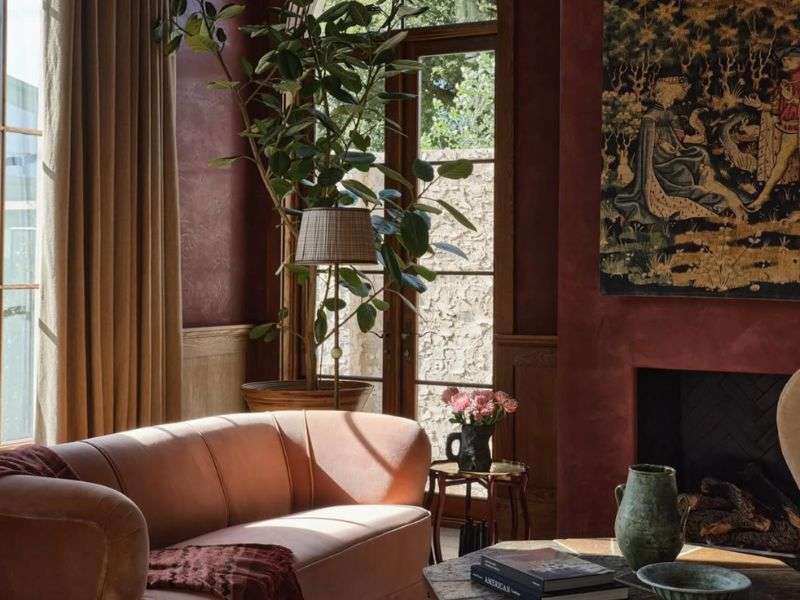
The Light Factor: Why Lime Finishes Change Everything
One of the biggest reasons designers are specifying Meoded’s lime-based finishes is their interaction with light.
Traditional paint reflects light evenly, giving walls a flat and consistent appearance. In contrast, lime wash and Venetian plaster absorb, refract, and diffuse light, revealing texture, movement, and subtle tonal variation that make surfaces feel dimensional and alive.
With a color like Red Wine, this difference is transformative. Instead of reading as a heavy dark red, it becomes layered, softened, and visually complex. It draws you in, rather than closing the space off.
Where Designers Are Using Red Wine Lime Wash & Venetian Plaster
This shade is proving to be incredibly versatile across both residential and commercial spaces, bringing a rich, intimate ambiance to dining rooms while adding depth and light-reflecting elegance to powder baths when paired with Venetian plaster. In bedrooms, it creates a cocoon-like, restful environment, while on feature walls and fireplaces it serves as a dramatic focal point. It also translates beautifully into home offices, where it lends a sophisticated and authoritative aesthetic.
Whether applied in the soft movement of lime wash or the polished depth of Venetian plaster, Red Wine consistently delivers a space that feels curated and immersive, and is an ideal shade for color drenching.
Paint vs Lime Wash vs Venetian Plaster
The key difference between standard paint, lime wash, and Venetian plaster comes down to how they interact with both the surface and light. Traditional paint sits on top of the wall, creating a flat, uniform finish, while lime wash absorbs into the surface to produce a matte, textured look with natural movement. Venetian plaster, on the other hand, is built up in layers, resulting in a polished, light-reflective finish that offers remarkable depth.
These lime wash and Venetian plaster trends highlight a growing demand for depth, texture, and natural movement in modern interiors, as homeowners and designers move away from flat finishes toward more dynamic, living surfaces.
Both lime wash and Venetian plaster offer something paint cannot: dimension, breathability, and a finish that evolves over time and ages beautifully, like red wine.
Additional Resources:
Lime Plaster Benefits: Venetian & Lime Plasters are Healthier Than Paint
Can Lime Wash Be Applied on Any Surface? | Complete Guide + Pro Tips
Lime Plaster and Venetian Plaster: The Powerful Textures Defining 2026
2026 Color of the Year Interior Trend: Warm Pink Plaster, Limewash & Clay Walls
Why Red Wine Works in Lime Wash and Venetian Plaster: FAQs
Q: What is lime wash paint?
A: Lime wash is a mineral-based paint made from crushed limestone that creates a breathable, matte finish with natural movement and variation.
Q: What is Venetian plaster?
A: Venetian plaster is a lime-based finish made from natural limestone and marble dust that creates a smooth, polished surface with depth and light reflection.
Q: Is lime wash better than regular paint?
A: Lime wash offers more texture, breathability, and natural variation than traditional paint, making it ideal for organic, high-end interiors.
Q: Where can you use Venetian plaster?
A: Venetian plaster is commonly used on walls, ceilings, fireplaces, and bathrooms for a polished, durable, elegant finish.
Q: Does lime wash change color over time?
A: Yes, lime wash develops subtle variation as it cures, creating a soft, lived-in patina.