

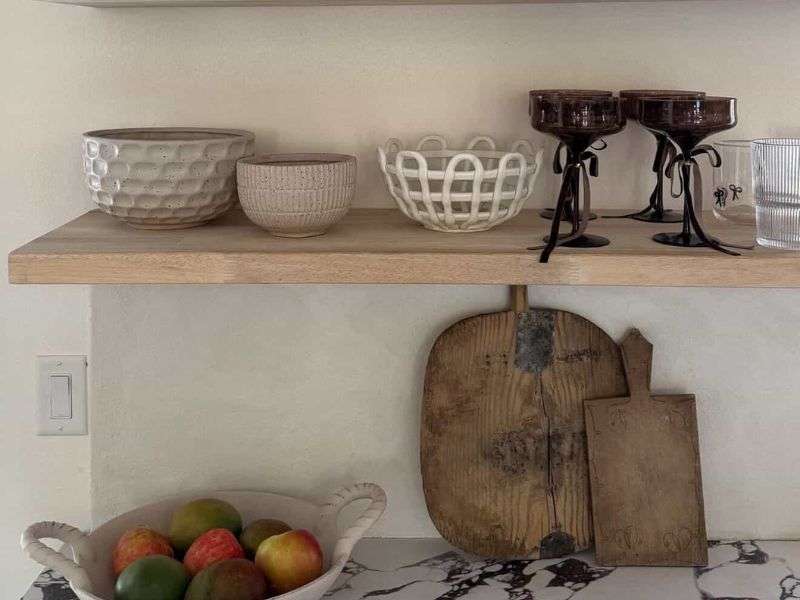
Microcement Plaster for Kitchen Renovation is changing the way homeowners and designers update kitchens. Instead of dealing with a messy, demolition-heavy remodel, many are choosing to plaster over tile, countertops, and other stable surfaces to create a seamless, modern finish with far less disruption.
There’s an obvious trend happening in kitchen design.
Homeowners and designers are moving away from demolition-heavy renovations and toward something more thoughtful, less stressful and often more cost-effective. Instead of ripping out perfectly functional or stable materials, they’re choosing to transform them with microcement plaster.
At the center of this viral movement is Concretta, our natural microcement plaster, formulated with superb adhesion, crafted with the highest quality ingredients, and likely one of the best design decisions you’ll ever make.
What Is Microcement Plaster for Kitchen Renovation?
Microcement plaster is a thin, hand-troweled, cement-based finish that bonds directly to existing surfaces, creating a seamless, continuous look without the need for removal or replacement.
Unlike traditional materials, it doesn’t rely on grout lines, seams, or bulky installation. Instead, it’s troweled on in layers, building depth while still able to stick directly to tile, granite, fiberglass and other stones. It can even be applied on painted drywall with the help of Meoded Quartz Primer. Read more about Concretta, here.
For modern kitchen design, Concretta is one of the most effective no-demo renovation tools available.
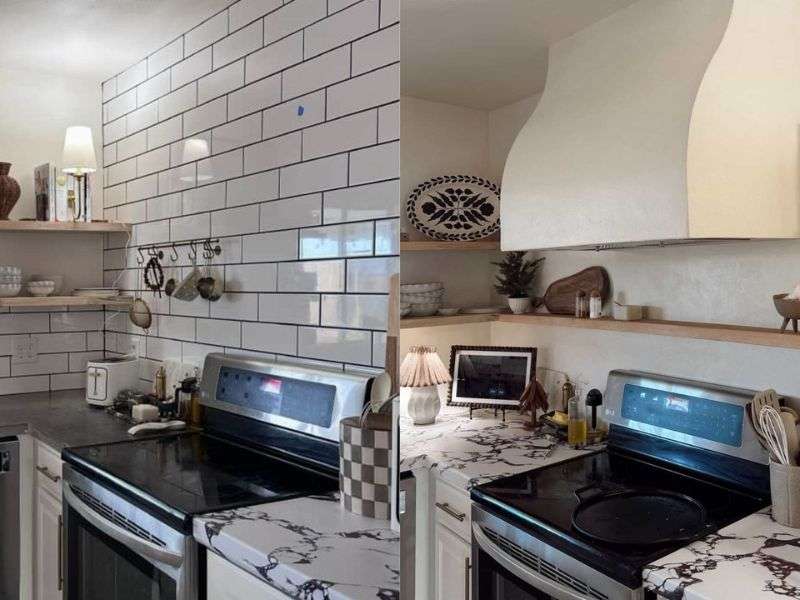
Why Microcement Plaster for Kitchen Renovation Works So Well
The Beauty of Renovating Without Demolition
There’s something incredibly appealing about working with what you already have.
Instead of tearing out tile backsplashes (along with the dust, noise, and cost) microcement plaster allows you to resurface them entirely.
This not only saves you money, it saves time and lessens the stress of being displaced from your kitchen for a prolonged period of time.
Concretta can be applied directly over:
- Ceramic or Porcelain Tile
- Marble or Granite
- Formica
- Painted Surfaces – when used with Meoded Quartz Primer
The transformation is dramatic, but the process is surprisingly straightforward. Today’s kitchen designs are less about excess and more about restraint and stylish functionality.
Think of seamless surfaces paired with muted, calming mineral tones create a quiet, cohesive atmosphere. Soft movement replaces busy patterns, allowing the space to feel more fluid and restful. The materials evoke an organic, natural quality rather than something overly manufactured.
Microcement aligns perfectly with this philosophy. It allows you to simplify a space without stripping away its original character.
Upgrade More Than Your Backsplash: A Design Perspective
This is where microcement moves from practical to truly transformative.
While backsplashes are often the starting point, the real design impact happens when you carry Concretta across multiple surfaces, especially countertops and islands.
Imagine an outdated kitchen with:
- Busy granite countertops
- Checkered or loud tile backsplash with heavy grout lines
- Visual breaks between every surface
Now reimagine it with microcement.
The backsplash flows seamlessly into the countertop. The island becomes a monolithic centerpiece. Every surface feels connected; calm, sculptural, intentional.
This is the essence of modern kitchen design, inspired by timeless Old-World aesthetics that have inspired design for centuries.
Why This Works So Well:
- It eliminates visual clutter
- It creates continuity across planes
- It turns surfaces into architectural elements
- It elevates even the most dated layouts
Applying Concretta over existing tile countertops, formica islands, or marble/granite surfaces allows you to completely redefine the space without replacing a single slab.
It’s not just a renovation, it’s a thoughtful and strategic redesign.
The future of kitchen design isn’t about tearing everything out.
It’s about rethinking what’s already there, working with the bones of your existing kitchen.
We created Concretta because we foresee microcement plaster not as a trend, but a shift in how we approach renovation and design.Microcement allows for creativity without excess, transformation without waste, and design without compromise.
And when used thoughtfully, it turns even the most outdated kitchen into something quietly extraordinary.
Sealing Microcement: Protection Meets Longevity
Sealing isn’t just a final step, it’s what protects the integrity of your finish over time.
Microcement may look like stone, but it behaves more like a refined, hand-crafted surface. And like any high-end finish, it needs to be treated with care.
Why Sealing Matters:
- Protects against water penetration
- Prevents staining from food, oils, and spills
- Enhances durability in high-use areas
- Preserves the aesthetic over time
Important Note:
Despite the name Concretta, this is not a standard concrete surface. It is a decorative microcement plaster system, thin, artisanal, and designed for beauty as much as performance. That means it should be respected like any fine finish.
For example:
- Avoid placing hot pans directly on the surface
- Use cutting boards and trivets
- Clean spills promptly
These small habits go a long way in maintaining the finish.
Sealing Systems by Surface Type
Backsplashes (Vertical, Low-Moisture Areas):
- Seal with Meoded PlasterGuard
This provides sufficient protection for everyday kitchen use while maintaining the natural look.
Countertops, Islands & Floors (High-Use Surfaces):
- Apply Meoded PlasterGuard
- Follow with Meoded PlasterSeal Plus
This two-step system creates a more durable barrier against:
- Water
- Stains
- Daily wear
Understanding “Open Time” (And Why It Matters)
One of the most important—and often overlooked—aspects of working with microcement plaster is open time.
What Is Open Time?
Open time refers to the window of time you have to work with the material after it’s been mixed and applied—before it begins to set.
With Meoded Concretta, the open time is shorter than traditional lime plasters.
Why This Is Important:
Because of its faster setting nature:
- You must work efficiently
- You should mix in smaller batches
- Timing and technique become critical
If the material begins to set before you’ve finished working it, you can lose the ability to achieve a smooth, consistent finish.
This is where experience really shows. Understanding how to:
- Work in sections
- Control your timing
- Maintain a wet edge
is essential for a successful application.
When to Hire a Professional for Microcement Plaster for Kitchen Renovation
Microcement is one of those materials that looks effortless—but requires real skill to execute well.
While many advanced DIYers take on smaller projects, Meoded Concretta is not considered beginner-friendly.
You Should Consider Hiring a Professional If:
- You’ve never used a trowel before
- You’re unfamiliar with a drill mixer
- You’re working on a large kitchen
- The space is highly visible (like a main backsplash or island)
- You want a refined, design-driven finish
Why Experience Matters
A professional applicator understands the nuances that make or break the final result:
- How to manage short open time
- How to work in controlled batches
- How to apply consistent, even layers
- How to create natural movement without overworking the surface
- How to properly prep and seal for longevity
Microcement is as much about technique as it is about material.
Finding the Right Installer
If you’re unsure where to start, a local Meoded dealer can recommend experienced applicators in your area.
This ensures:
- Proper installation
- A high-end finish
- Long-term performance
Microcement Plaster for Kitchen Renovation continues to grow in popularity as a smart alternative to traditional kitchen remodeling.
Additional Resources
What is Microcement? A Complete Guide to this Popular Plaster for Showers
3 Reasons Top Designers Love Meoded Concretta
Moroccan Clay vs Concretta — Which Textured Finish to Choose
Why Choosing Concretta Microcement Over Tadelakt Is the Smarter Choice | 5 Reasons
Microcement Kitchen Makeover FAQs
Q: Can you apply microcement over an existing tile backsplash?
A: Yes, specific microcement plasters can be applied directly over tile, including ceramic and porcelain, as long as the surface is properly cleaned and stable. High-quality systems like Meoded Concretta are designed with strong adhesion, allowing you to cover grout lines and create a seamless, modern finish without removing the tile underneath.
Q: Will grout lines show through microcement on a backsplash?
A: When done properly, the finished surface appears smooth and continuous, with no visible tile pattern underneath. Depending on the depth of the gout lines, you may need 2 -3 thin coats to create a seamless, no-shadow look.
Q: Is microcement waterproof for kitchen backsplashes?
A: Microcement itself is not fully waterproof. For kitchen backsplashes (which are vertical and typically low-moisture), Meoded PlasterGuard sealer is sufficient to protect against splashes and everyday use. For areas with more exposure to water or heavy use, additional sealers may be required.
Q: Can microcement be used over kitchen countertops and islands too?
A: Yes, microcement can be applied over existing countertops, including tile, laminate (Formica), marble, and granite. However, because these are high-use surfaces, they must be sealed with a more durable system (such as a combination of PlasterGuard and PlasterSeal Plus) to protect against stains, water, and wear.
Q: Is microcement a good DIY project for kitchen renovations?
A: While some experienced DIYers successfully apply microcement, it is not considered beginner-friendly, especially for kitchens. Factors like short open time, trowel technique, and layering require skill. For larger or highly visible areas like backsplashes and islands, hiring a professional is strongly recommended.
Q: How durable is microcement in a kitchen setting?
A: When properly applied and sealed, microcement is highly durable and performs well in kitchens. However, it is still considered a decorative finish rather than industrial concrete. It should be treated with care, avoiding direct heat (like hot pans), using cutting boards, and cleaning spills promptly to maintain its appearance over time.